
Bodmer Papyrus 𝔓66
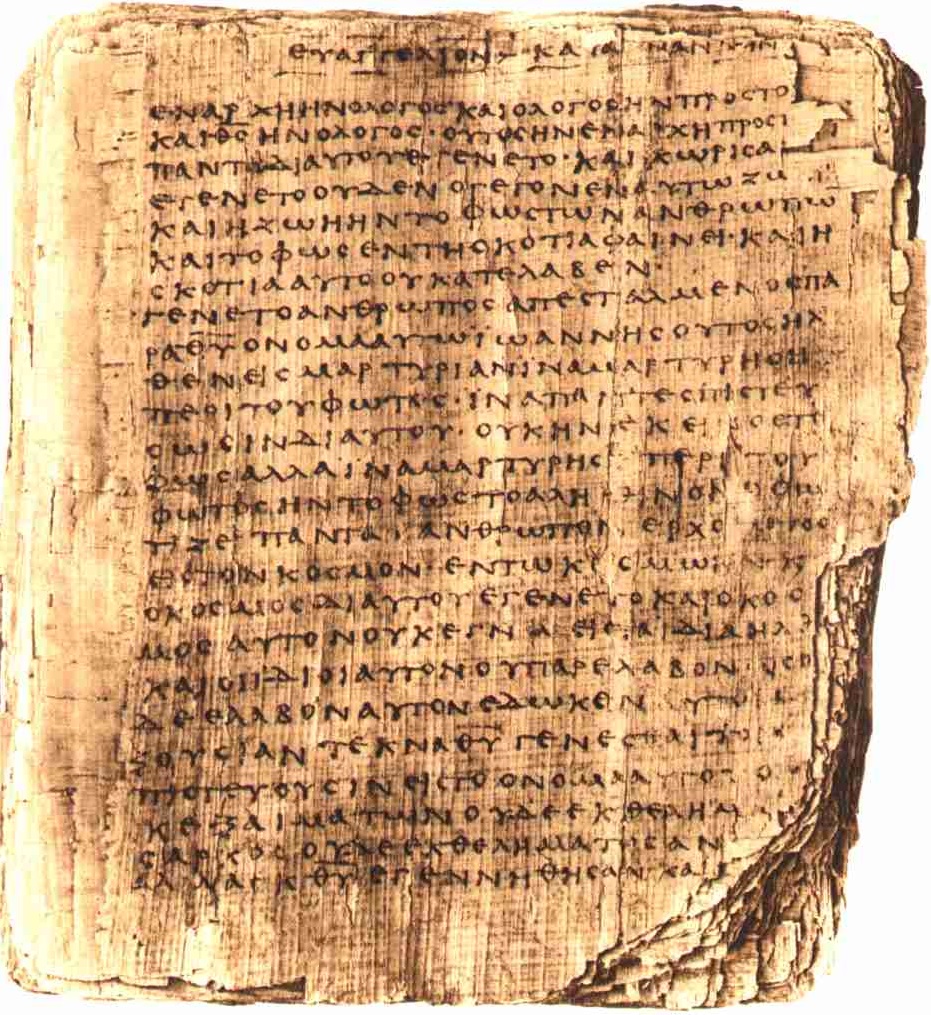
Bodmer Papyrus 𝔓66: An Early Witness to the Gospel of John
The Bodmer Papyrus P66, also designated as 𝔓66 or P. Bodmer II, stands as one of the most valuable ancient manuscripts of the New Testament. Discovered in the mid-20th century, this papyrus codex preserves a substantial portion of the Gospel of John and offers critical insights into the early transmission of Christian texts. As part of the renowned Bodmer Papyri collection, P66 has captivated scholars for its age, condition, and textual features. This article explores its history, contents, text type, notable variants, and enduring significance in Biblical research.
History and Discovery
The story of 𝔓66 begins in 1952, when it was unearthed at Jabal Abu Mana near Dishna, Egypt, alongside other artifacts in what is believed to have been a monastic or scholarly cache. The manuscript was acquired by Swiss collector Martin Bodmer and became part of his private library. Its initial publication came swiftly in 1956 by editor Victor Martin, who released the first portion, followed by a full edition with photographic plates in 1962. This rapid dissemination marked P66 as the most significant New Testament manuscript find since the Chester Beatty Papyri in the 1930s. The codex’s excellent preservation—including intact leaves and original binding stitches—distinguished it from many fragmented papyri of the era.
Dating 𝔓66 has sparked ongoing debate among paleographers. Victor Martin initially placed it around AD 200 based on its handwriting style, a view supported by many scholars who see it as a product of the early third century. However, Herbert Hunger suggested an even earlier date in the mid-second century (AD 100–150), while more recent analyses, such as Brent Nongbri’s 2014 study, argue for a possible extension into the early or mid-fourth century, considering factors like format, construction, and provenance. Regardless of the precise date, 𝔓66 is universally recognized as one of the earliest substantial witnesses to the Gospel of John, bridging the gap between the apostolic era and later uncial codices like Sinaiticus and Vaticanus.
The manuscript’s scribal history is equally intriguing. Studies indicate it was likely produced by a single professional scribe who made numerous corrections, possibly after comparing it to another exemplar. Some scholars, like James Royse, argue most corrections were self-made by the original copyist, revealing a process of textual revision aimed at clarity rather than strict fidelity to an “original” form. A controversial theory by Elizabeth Schrader Polczer proposes that the scribe may have altered references to Mary and Martha in John 11, potentially introducing Martha as a distinct character.
Contents
𝔓66 is a codex comprising 39 folios (78 leaves, 156 pages), each measuring approximately 14.2 × 16.2 cm with 15–25 lines per page. It contains a near-complete text of the Gospel of John, missing only small sections due to damage or lacunae. The preserved portions include John 1:1–6:11; 6:35–14:26, 29–30; 15:2–26; 16:2–4, 6–7; 16:10–20:20, 22–23; and 20:25–21:9, 12, 17. Notably, the first 26 leaves are fully intact, making it one of the best-preserved early Gospel manuscripts.
The text is written in Greek uncial script, with consistent use of Nomina Sacra and at least ten instances of the staurogram (a early Christian symbol combining tau and rho to represent the cross) in John 19. This format reflects early Christian book production practices, transitioning from scrolls to codices, which were more practical for scriptural use.
Text Type and Characteristics
𝔓66 is classified as a representative of the Alexandrian text-type, known for its concise and early readings, often considered closer to the original New Testament text. Kurt Aland categorized it as “Free text” in Category I, indicating high-quality transmission with minimal later interpolations. Its text shows strong affinities with other early Alexandrian witnesses, particularly Papyrus 75 (𝔓75), Codex Vaticanus (B), Codex Sinaiticus (ℵ), and Uncial 0162. Gordon Fee’s 1968 analysis described P66 as having a “mixed” character, blending Alexandrian elements with occasional Western or proto-Byzantine tendencies, especially in its corrections.
The scribe’s habits reveal a focus on readability, with variations in word order, conjunctions, verb forms, personal pronouns, and articles before proper nouns. Over 450 corrections appear throughout, many shifting toward smoother phrasing, suggesting the copyist revised against a secondary exemplar. This “Byzantine-like” editing in a second-century context challenges traditional views of text-type development.
Significant Variants
𝔓66 features several noteworthy textual variants that illuminate early transmission dynamics. It omits the pericope adulterae (John 7:53–8:11), aligning with 𝔓75, ℵ, B, and other early manuscripts, supporting the view that this passage was a later addition. Similarly, it lacks John 5:4 (the angel stirring the waters at Bethesda), marking it as an explanatory gloss absent in the earliest tradition.
In John 1:18, P66 reads “μονογενοῦς θεός” (“the only begotten God”), a theologically significant variant emphasizing Jesus’ divinity, shared with P75, ℵ, and B, over the later “μονογενοῦς υἱός” (“the only Son”). John 1:34 presents “ὁ ἐκλετος τοῦ θεοῦ” (“the Chosen One of God”) instead of “ὁ υἱός τοῦ θεοῦ” (“the Son of God”), bolstering an early alternative reading.
Unique readings include John 1:15’s “ὁ ρισω” (supported by limited minuscules) instead of “ὁ ὀπίσω,” and John 13:5’s “ποδονιπτῆρα” (“foot-basin”) over “νιπτῆρα” (“basin”). In John 13:7, it has an erroneous “αρ” for “αρτι” (“now”). Variants in John 11:1–3, 5, and 12:2 involve pronouns and names related to Mary and Martha, with corrections in P66 suggesting possible scribal adjustments that downplay women’s roles or clarify relationships. These differences, while minor, highlight fluidity in second-century copying.
Importance in Biblical Research
𝔓66’s value in Biblical textual criticism cannot be overstated. As an early Alexandrian witness, it provides concrete evidence for the stability of the Johannine text by AD 200, predating major uncials by over a century. Its close relationship with 𝔓75 demonstrates that a “pure” Alexandrian tradition existed early, challenging theories of extensive later recension. By confirming omissions like John 7:53–8:11 and supporting key readings in Christological passages, P66 aids in reconstructing the “original” New Testament text.
Beyond variants, 𝔓66 offers a window into ancient scribal culture. Its corrections reveal revision practices, while features like nomina sacra and staurograms reflect emerging Christian textual conventions. In methodological terms, alongside 𝔓75, it supports “reasoned eclecticism”—balancing internal and external evidence—in modern textual criticism. Its publication revolutionized studies of John’s Gospel, influencing editions like the Nestle-Aland and United Bible Societies’ Greek New Testament.
In summary, Bodmer Papyrus 𝔓66 remains a cornerstone of New Testament scholarship, bridging ancient Christianity and modern research through its preserved text and historical insights. Its ongoing analysis continues to refine our understanding of Biblical origins.